Sunday, November 14, 2010

Found Collages

Collage as an artform is a unique and flexible medium. It allows independent images and forms to come together and create a new whole that is simultaneously derivative and original. Collage compositions can be abstract or literal; expressing emotion and feeling through color and form or sharing an idea or story through concrete representations. Collages can juxtapose the unlikeliest of images in unexpected ways to convey meaning or challenge assumptions. This open nature of collages makes them a powerful format for artistic expression and an intriguing medium for artistic encounters.

One of the most intriguing aspects of collages is their unexpected possibility. Almost anything can go into the creation of a collage and one never quite knows the full extent of what might be encountered when visually exploring a collage. This uninhibited potential makes the creation and visual consumption of collages a constant adventure.

Another unique aspect of collage is dimensionality. Because collage is a coming together of many separate pieces into a new whole there exists the opportunity for layering and overlapping in ways that create depth. Sometimes the collage creates an illusion of depth through thoughtful juxtaposition of elements, but in many cases collage creates a tangible physical depth through the layering of pieces on top of each other. This physical sense of depth is akin to our everyday experience of depth in the world. We take up space and we move in the spaces in between the things that surround us - we expect and innately understand depth because we live in constant dimensional encounter with the world around us.

In the opposite vein there are also times when the collage technique is used to flatten a sense of depth. This can be seen in the collapsing of space between two or more elements and a merger of those elements into a new relationship and composition. This ability of collage compositions to flatten space jars our visual sensibilities, challenging our expectations and encouraging us to look at the relationship between things in new ways.

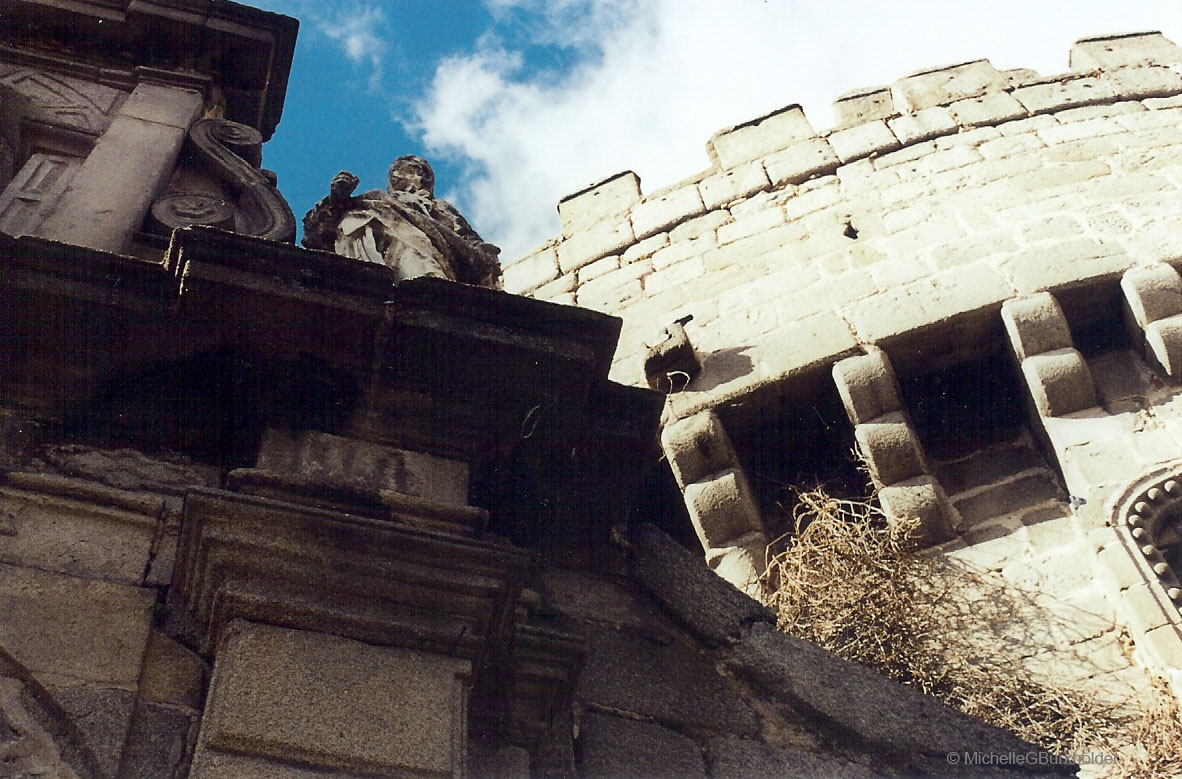
I like to carry these lessons of collage with me into my encounters with the world as a reminder to constantly look at the elements of life around me and investigate how moments, events and even people overlap and relate to each other in creative and unexpected ways. I also enjoy being on the lookout for found collages - collages that exist independently of intentional creation but are instead elements that, when encountered as a whole, come together into a visually pleasing composition. Found collages are another method of keeping me engaged in constantly looking at the world around me in new ways, seeing things for what they are and what they may become when joined in relationship with their surrounding context.

Images - Found Collages


Photographs of Found Collages

Wednesday, October 27, 2010

Change of Seasons

It is Fall again in Maryland and the wind is turning cooler as the leaves begin to change. I love the fall, I always have. It is a season of in between, a slowing down of the long days of summer and a time of preparation for the upcoming winter nights.

In many ways my life is immune to the impact of seasons - I work indoors, on a computer, in a building in which the temperature is moderated to keep me cool in the summer and warm in the winter. My hands do not dig into the earth and feel the changes in texture as it cycles through seasonal life. My yearly schedule is even consistent without a school year type schedule to provide structure. Sometimes it scares me how disconnected I can live from nature - as I often find myself forgetting what season I am in or what season I am heading into or coming out of.

There is something about this disconnection from the seasonal cycles of nature that feels very unnatural, but I am comforted by fall. Fall calls me to attention, it brings me back to myself, reminding me of the fleeting nature of things and inspiring me to once again be aware; to take notice of the days of my life and to step lively into them with celebration of where I've come from, excitement about where I'm going and all the while being engaged in the present moment.

Fall does this for me through the slant of the sun which lights up the afternoon in a brilliance and warmth that is enhanced by and enhances the color of the changing leaves. Fall does this through the falling of leaves which reminds me of the impermanence of things, bringing a delightful crackling sound to my steps as I walk through them and making space for the new life that will burst forth after the restful dormancy of winter. Fall is simultaneously melancholy and hopeful and brings the warm glow of those emotions to life within me. Fall ushers in a cold season of dark evenings but it sends us off to meet winter in a blaze of color and possibility.

So I give thanks for yet another change of season that has once again brought fall to my front door. I give thanks for the reminder of the natural cycle of change, for those things which are coming to a close, those things which remain in full swing, and the potential of things yet to come. I give thanks for the beauty surrounding me and the fullness of life in this transitional moment.

The Color of Leaves


Fall Leaf Photographs

Wednesday, September 29, 2010

Contrast

The idea of contrast as an element of art is the juxtaposition of opposites - a stressing of differences between elements that provides a moment of interest. Contrast creates a spot that draws attention and in doing so it highlights the unique qualities of each of the contrasting elements. Contrast is also used to separate objects and to make something distinguishable against its surrounding environment.

Contrast is all about the dissimilarity of things. It is a celebration of differences with the intention of honoring and exposing the individuality of each of the contrasting elements. A celebration that is only made possible through relationship. Without connection, each element remains a unique entity of intrinsic value and independent character. Yet side by side, in relationship, contrast can re-define each element opening a new depth of understanding and experience.

Image: Calder

Pen & Colored Pencil
Composition Based on Jewelry Designed by Alexander Calder

Saturday, August 21, 2010

That's Theological - Bug Bites

I have been working on a series of wood collages the past couple of weeks and last week it was finally time to begin painting them. Tuesday evening was the first rain free evening of the week so I took advantage of the opportunity to get outside and paint. I laid out a big sheet of paper on the ground, put the collages on top of the paper and began to apply the first layer of paint. I was only painting the backs of the collages in the first round so it didn't take very long to get them coated. As I came inside after moving them to the porch to dry for the rest of the evening, I began to feel stinging and itchy pain on my arms and feet. Upon investigation I found that I had been bitten by mosquitoes several times on both arms and once on each foot during my little outdoor adventure. Subtle swelling of the spots ensued and I quickly applied some aloe to cool the burning pain of the bites.

I immediately recognized the silliness of the situation. I should have known better than to paint outside, at dusk, on a summer evening without some sort of bug bite prevention in place. However, what had happened had already happened so there was nothing to be done but breathe through the immediacy of the pain, wait for it to subside, and make a mental note to avoid such a situation in the future. In fact, I did more than just make a mental note about it - I posted a status update on Facebook about it stating "the next time I get the bright idea to paint outside at dusk on a summer evening - please remind me that bugs bite." I guess I figured that actually writing it down and putting my experience out there in the virtual world might help me remember the painful reality of the moment and assist me in my vow to not repeat such an event.

Time passed and the stinging and swelling subsided and all of a sudden it was Friday evening and I found myself with some free time to fill. It was a nice evening again so I thought to myself that I really should get a layer of paint on the front of the collages. So outside I went and laid out a big sheet of paper and placed the collages on top of it and began to apply the first coat of paint to the front of the collages. I was half way through coating the second collage when I felt the itchiness start and the realization dawned on me that I was painting outside, at dusk, on a summer evening and I reminded myself - oh yeah - bugs bite. Fifteen bites later, the collages were resting on the porch to dry for the evening and I was, once again, inside applying the cooling salve of aloe to my burning and itching arms.

What is it about the human brain that allows us to have experiences, learn lessons from those experiences and yet still allows us to venture into the same setup again when we know full well that the outcome may be quite painful? Is it a desire to test the nature of things, is it an innate sense of arrogance challenging us to prove that what we know should happen will not occur just because we do not want it to? Maybe it is an underlying acceptance of pain as an interwoven aspect of life and our previous experiences with pain have taught us that with time comes the easing of pain and eventual healing. Or perhaps it is simply a lack of attention to intention as we move through the moments of life.

It was certainly not my intention to hurt myself by going outside to paint on Friday evening, I was distracted by the task at hand and did not even think to take a moment to be attentive to the entirety of the situation. This lack of attention to the whole very often leads to complex and sometimes messy situations. Awareness of the larger context of any given situation can provide insight into the intricacies of actions, interactions, and reactions that may occur. Such insights allow space for the understanding of motivations and situations that, without a willingness to be tuned in to the big picture, may be overwhelming, confusing, or discomforting.

Contextual attentiveness offers us an opportunity to enter into situations with an understanding spirit and, if needed, the proper equipment necessary for a positive and engaging outcome. That being said, I am also fully aware that it remains impossible for the human brain to have a complete understanding of the whole of any context regardless of our intentions. We simply do not have access to every bit of information that is necessary in any given situation to have a complete understanding. There are so many variables at play in the equation of each moment that it is almost surprising that we come through so well, so often.

Here enters grace. Grace which knows that which we do not know and intervenes even when we are unaware of the assistance we receive. Grace cushions our humanity and empowers us to encounter each experience in open fullness. Grace is not a magic wand that makes all things as we wish them to be, it does not always act to prevent pain or complexity, nor does the presence of grace relieve us of our responsibility to be attentive and aware of that which we can grasp and act on in any situation. Yet grace continues to be present, filling in the gaps of our human knowledge and sorting out far more than forgotten bug spray.

So, here I sit with the remnants of bug bites on my arms reminding me to be thankful for the Grace which constantly surrounds and inconspicuously intercedes in so many moments of life.

Bug Bites - That's Theological.